

What are perps?
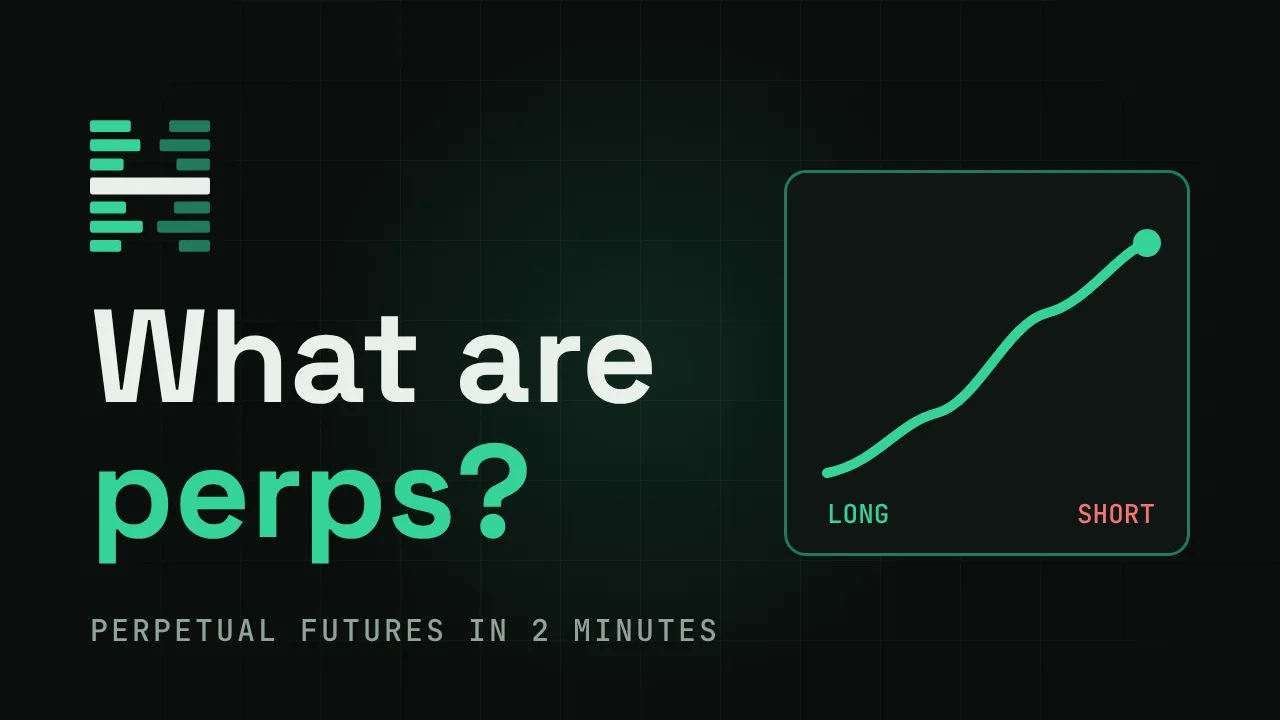
Perps are perpetual futures: contracts that let you bet on a price going up or down, with leverage, and that never expire. You can hold one for a minute or a month. There is no delivery date and nothing to roll over.
This page explains how they work in plain words, then how HardBasis runs them, with every number in sats.
Try it with test sats
HardBasis is on testnet. You can open a perp position in about a minute and lose nothing, because test sats have no value. How to trade perps on testnet.
The short version
- You pick a market, for example bitcoin against the dollar.
- You go long if you think the price will rise, or short if you think it will fall.
- You post margin, a deposit that backs the position. With leverage, the position can be larger than the margin.
- If the price moves your way, you gain. If it moves against you far enough that your margin can no longer cover the loss, the position is liquidated: closed for you.
- While you hold it, you pay or receive funding, a small periodic payment between the traders on each side.
Why "perpetual"
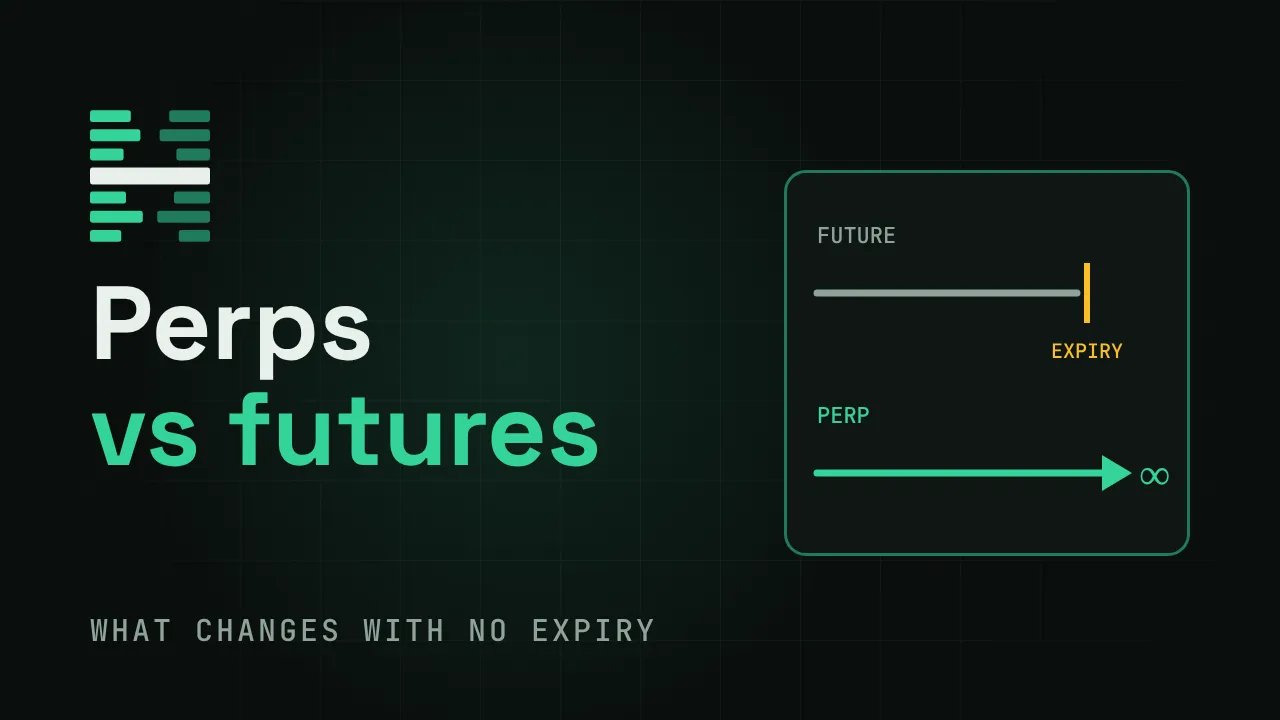
A classic futures contract has an expiry date. On that date it settles, and its price is forced to meet the real price of the thing it tracks. A perp has no such date, so nothing forces a settlement. Instead, funding, a payment between the traders on each side, keeps holding a crowded position from being free.
What funding is
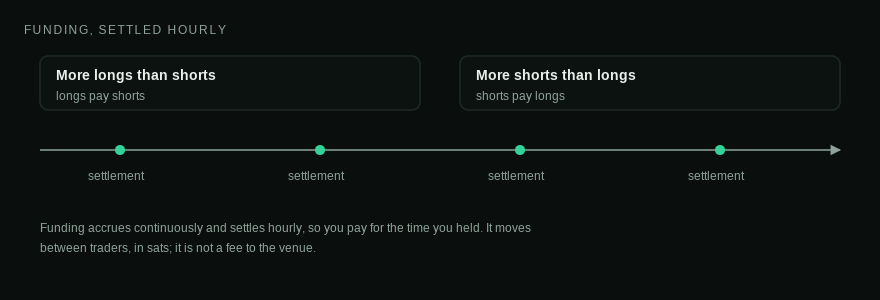
Funding is a payment between the people holding positions, not a fee to the venue.
On HardBasis the rate comes from open-interest skew plus a small baseline.
- When the rate is positive, longs pay shorts. Holding the crowded side costs a little.
- When it is negative, shorts pay longs.
On HardBasis, funding settles every 1 hour and accrues continuously in between, so you pay for the time you actually held a position, not for being open at the moment of a snapshot. The last 100 hourly rates the engine has applied are public. Funding rate explained.
Leverage and liquidation
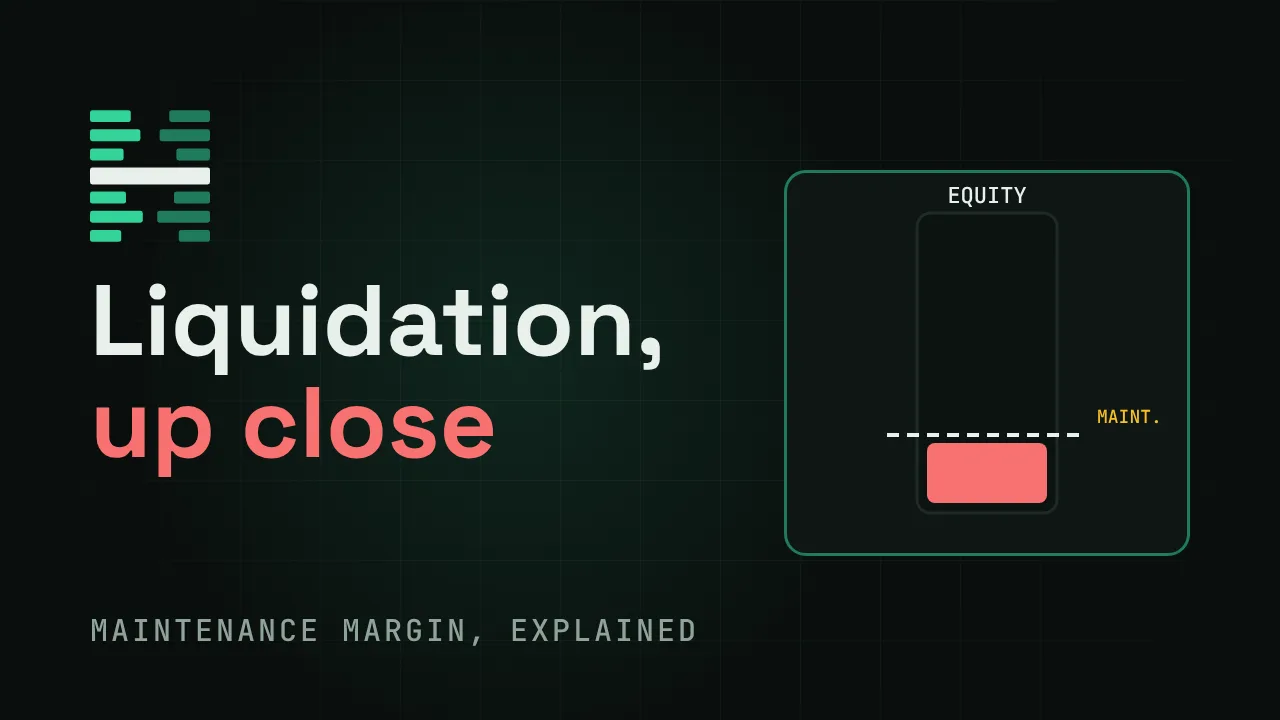
Leverage means a small deposit controls a larger position. It works in both directions: gains and losses are both measured against the full position, not against your deposit.
If losses eat into your margin until it falls below the maintenance level, the position is liquidated. That is the main risk of perps, and the reason to size small while you learn. On HardBasis the maximum leverage is 10×, and the ticket shows your implied liquidation price before you place anything. Margin and liquidation, and the liquidation price, calculated.
Perps margined in bitcoin
Most perps people search for are margined in dollars or in dollar tokens. A perp can also be margined and settled in bitcoin itself. That is called an inverse perp, and it is the only kind of bitcoin perp HardBasis runs.
On an inverse perp you deposit sats, post sats as margin, and every profit, loss, fee and funding payment moves in sats. The price is quoted in dollars; nothing you hold is. It behaves a little differently from a dollar perp, especially for longs. BTC perps margined in sats.
How HardBasis runs perps
Two choices shape everything else.
There is no order book. You do not trade against other traders. Every fill executes against the HardBasis vault at the oracle price, moved against you by a published spread and an impact term that grows when positioning is one sided. Slippage is a formula you can read, not whoever happens to be resting size.
Every number is checkable. The fee, funding parameters and margin levels on this site are rendered from the engine's own constants, and the reserve check is public. Trust and Proof of Reserves.
The taker fee is 3 bps of traded notional, charged in sats. There is no maker fee, because there is no book to make.
Common questions
What does perp mean?
Perp is short for perpetual future: a futures contract with no expiry date. You can hold the position for as long as your margin covers it.
What is the difference between perps and futures?
A standard future settles on a set date, and that settlement ties its price to the underlying. A perp never settles. Instead, funding, a payment between the traders on each side, keeps holding a crowded position from being free.
What is funding?
A payment between position holders, not a fee to the venue. On HardBasis the rate comes from open-interest skew plus a small baseline: when it is positive, longs pay shorts; when it is negative, shorts pay longs. It settles every 1 hour, accrues continuously in between, and is paid in sats.
How are perps different from spot?
Buying spot means you own the asset. A perp is a contract on the price: you can go long or short, use leverage, you pay or receive funding, and the position is liquidated if your equity falls below maintenance margin. Nothing is delivered.
Can I try perps without risking money?
Yes. HardBasis is on testnet: test sats are free to get and are worth nothing, so you can open and close positions with no real risk. How to trade perps on testnet.
Next
- How to trade perps on testnet, step by step
- BTC perps margined in sats
- Funding rate explained
- Perps vs spot
- Trading and fees
Testnet only. Test sats have no value. Nothing here is advice or an offer. Who can use the real venue: Eligibility and legal.